# Framing an ML problem
After verifying that your problem is best solved using either a predictive
ML or a generative AI approach, you're ready to frame your problem in ML terms.
You frame a problem in ML terms by completing the following tasks:
- Define the ideal outcome and the model's goal.
- Identify the model's output.
- Define success metrics.
## Define the ideal outcome and the model's goal
Independent of the ML model, what's the ideal outcome? In other words, what is
the exact task you want your product or feature to perform? This is the same
statement you previously defined in the [State the goal](https://developers.google.com/machine-learning/problem-framing/problem#state_the_goal)
section.
Connect the model's goal to the ideal outcome by explicitly defining what you
want the model to do. The following table states the ideal outcomes and the
model's goal for hypothetical apps:
| **App** | **Ideal outcome** | **Model's goal** |
|---|---|---|
| Weather app | Calculate precipitation in six hour increments for a geographic region. | Predict six-hour precipitation amounts for specific geographic regions. |
| Fashion app | Generate a variety of shirt designs. | Generate three varieties of a shirt design from text and an image, where the text states the style and color and the image is the type of shirt (t-shirt, button-up, polo). |
| Video app | Recommend useful videos. | Predict whether a user will click on a video. |
| Mail app | Detect spam. | Predict whether or not an email is spam. |
| Financial app | Summarize financial information from multiple news sources. | Generate 50-word summaries of the major financial trends from the previous seven days. |
| Map app | Calculate travel time. | Predict how long it will take to travel between two points. |
| Banking app | Identify fraudulent transactions. | Predict if a transaction was made by the card holder. |
| Dining app | Identify cuisine by a restaurant's menu. | Predict the type of restaurant. |
| Ecommerce app | Generate customer support replies about the company's products. | Generate replies using sentiment analysis and the organization's knowledge base. |
### Identify the output you need
Your choice of model type depends upon the specific context and constraints of
your problem. The model's output should accomplish the task defined in the
ideal outcome. Thus, the first question to answer is
"What type of output do I need to solve my problem?"
If you need to classify something or make a numeric prediction, you'll probably
use predictive ML. If you need to generate new content or produce output
related to natural language understanding, you'll probably use generative AI.
The following tables list predictive ML and generative AI outputs:
| | ML system | Example output |
| Classification | Binary | Classify an email as spam or not spam. |
| Classification |
| Classification |
|---|---|---|
| Multiclass single-label | Classify an animal in an image. |
| Multiclass multi-label | Classify all the animals in an image. |
| Multidimensional regression | Predict blood pressure, heart rate, and cholesterol levels for an individual. |
[**Table 1.** Predictive ML]
| Model type | Example output |
| Text | Summarize an article. Reply to customer reviews. Translate documents from English to Mandarin. Write product descriptions. Analyze legal documents. |
| Image | Produce marketing images. Apply visual effects to photos. Generate product design variations. |
| Audio | Generate dialogue in a specific accent. Generate a short musical composition in a specific genre, like jazz. |
| Video | Generate realistic-looking videos. Analyze video footage and apply visual effects. |
| Multimodal | Produce multiple types of output, like a video with text captions. |
|---|---|
[**Table 2.** Generative AI]
### Classification
A [**classification model**](https://developers.google.com/machine-learning/glossary#classification-model)
predicts what category the input data belongs to, for example, whether an input
should be classified as A, B, or C.
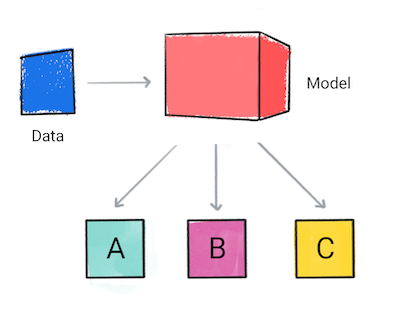
**Figure 1.** A classification model making predictions.
Based on the model's prediction, your app might make a decision. For example, if
the prediction is category A, then do X; if the prediction is category B, then
do, Y; if the prediction is category C, then do Z. In some cases, the prediction
*is* the app's output.
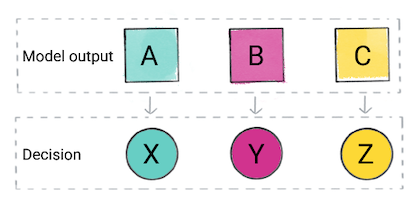
**Figure 2.** A classification model's output being used in the product code to
make a decision.
### Regression
A [**regression model**](https://developers.google.com/machine-learning/glossary#regression-model) predicts
a numerical value.
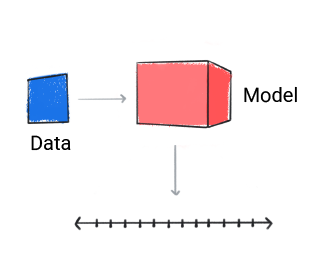
**Figure 3.** A regression model making a numeric prediction.
Based on the model's prediction, your app might make a decision. For example, if
the prediction falls within range A, do X; if the prediction falls within range
B, do Y; if the prediction falls within range C, do Z. In some cases, the
prediction *is* the app's output.
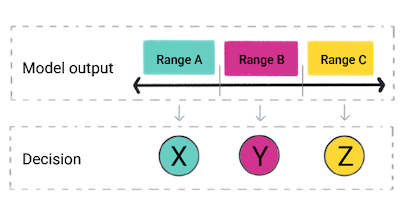
**Figure 4.** A regression model's output being used in the product code to make
a decision.
Consider the following scenario:
You want to [cache](https://wikipedia.org/wiki/Cache_(computing))
videos based on their predicted popularity. In other words, if your model
predicts that a video will be popular, you want to quickly serve it to users. To
do so, you'll use the more effective and expensive cache. For other videos,
you'll use a different cache. Your caching criteria is the following:
- If a video is predicted to get 50 or more views, you'll use the expensive cache.
- If a video is predicted to get between 30 and 50 views, you'll use the cheap cache.
- If the video is predicted to get less than 30 views, you won't cache the video.
You think a regression model is the right approach because you'll be predicting
a numeric value---the number of views. However, when training the regression
model, you realize that it produces the same
[loss](https://developers.google.com/machine-learning/glossary#loss-function) for a prediction of 28 and 32
for videos that have 30 views. In other words, although your app will have very
different behavior if the prediction is 28 versus 32, the model considers both
predictions equally good.
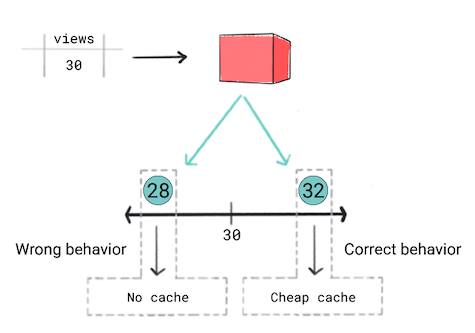
**Figure 5.** Training a regression model.
Regression models are unaware of product-defined thresholds. Therefore, if your
app's behavior changes significantly because of small differences in a
regression model's predictions, you should consider implementing a
classification model instead.
In this scenario, a classification model would produce the correct behavior
because a classification model would produce a higher loss for a prediction of
28 than 32. In a sense, classification models produce thresholds by default.
This scenario highlights two important points:
- **Predict the decision**. When possible, predict the decision your app will
take. In the video example, a classification model would predict the
decision if the categories it classified videos into were "no cache," "cheap
cache," and "expensive cache." Hiding your app's behavior from the model can
cause your app to produce the wrong behavior.
- **Understand the problem's constraints**. If your app takes different
actions based on different thresholds, determine if those thresholds are
fixed or dynamic.
- Dynamic thresholds: If thresholds are dynamic, use a regression model and set the thresholds limits in your app's code. This lets you easily update the thresholds while still having the model make reasonable predictions.
- Fixed thresholds: If thresholds are fixed, use a classification model and label your datasets based on the threshold limits.
In general, most cache provisioning is dynamic and the thresholds change
over time. Therefore, because this is specifically a caching problem, a
regression model is the best choice. However, for many problems, the
thresholds will be fixed, making a classification model the best solution.
Let's take a look at another example. If you're building a weather app whose
ideal outcome is to tell users how much it will rain in the next six hours,
you could use a regression model that predicts the label `precipitation_amount.`
| **Ideal outcome** | **Ideal label** |
|---|---|
| Tell users how much it will rain in their area in the next six hours. | `precipitation_amount` |
In the weather app example, the label directly addresses the ideal outcome.
However, in some cases, a one-to-one relationship isn't apparent between the
ideal outcome and the label. For example, in the video app, the ideal outcome is
to recommend useful videos. However, there's no label in the dataset called
`useful_to_user.`
| **Ideal outcome** | **Ideal label** |
|---|---|
| *Recommend useful videos.* | `?` |
Therefore, you must find a proxy label.
### Proxy labels
[**Proxy labels**](https://developers.google.com/machine-learning/glossary#proxy-labels) substitute for
labels that aren't in the dataset. Proxy labels are necessary when you can't
directly measure what you want to predict. In the video app, we can't directly
measure whether or not a user will find a video useful. It would be great if the
dataset had a `useful` feature, and users marked all the videos that they found
useful, but because the dataset doesn't, we'll need a proxy label that
substitutes for usefulness.
A proxy label for usefulness might be whether or not the user will share or like
the video.
| **Ideal outcome** | **Proxy label** |
|---|---|
| *Recommend useful videos.* | `shared OR liked` |
Be cautious with proxy labels because they don't directly measure what you want
to predict. For example, the following table outlines issues with potential
proxy labels for *Recommend useful videos*:
| **Proxy label** | **Issue** |
|---|---|
| Predict whether the user will click the "like" button. | Most users never click "like." |
| Predict whether a video will be popular. | Not personalized. Some users might not like popular videos. |
| Predict whether the user will share the video. | Some users don't share videos. Sometimes, people share videos because they **don't** like them. |
| Predict whether the user will click play. | Maximizes clickbait. |
| Predict how long they watch the video. | Favors long videos differentially over short videos. |
| Predict how many times the user will rewatch the video. | Favors "rewatchable" videos over video genres that aren't rewatchable. |
No proxy label can be a perfect substitute for your ideal outcome. All will
have potential problems. Pick the one that has the least problems for your
use case.
### Check Your Understanding
A company wants to use ML in their health and well-being app to help people feel better. Do you think they'll need to use proxy labels to accomplish their goals? Yes, the company will need to find proxy labels. Categories like happiness and well-being can't be measured directly. Instead, they need to be approximated with respect to some other feature, like hours spent exercising per week, or time spent engaged in hobbies or with friends. No, the company won't need to use proxy labels. Happiness and well-being can be directly measured.
### Generation
In most cases, you won't train your own generative model because doing so
requires massive amounts of training data and computational resources. Instead,
you'll customize a pre-trained generative model. To get a generative model to
produce your desired output, you might need to use one or more of the following
techniques:
- [**Distillation**](https://developers.google.com/machine-learning/glossary#distillation). To create a
smaller version of a larger model, you generate a synthetic labeled dataset
from the larger model that you use to train the smaller model. Generative
models are typically gigantic and consume substantial resources (like memory
and electricity). Distillation allows the smaller, less resource-intensive
model to approximate the performance of the larger model.
- [**Fine-tuning**](https://developers.google.com/machine-learning/glossary#fine-tuning) or
[**parameter-efficient tuning**](https://developers.google.com/machine-learning/glossary#parameter-efficient-tuning).
To improve the performance of a model on a specific task, you need to further
train the model on a dataset that contains examples of the type of output you
want to produce.
- [**Prompt engineering**](https://developers.google.com/machine-learning/glossary#prompt-engineering). To
get the model to perform a specific task or
produce output in a specific format, you tell the model the task you want
it to do or explain how you want the output formatted. In other words, the
prompt can include natural language instructions for how to perform the task
or illustrative examples with the desired outputs.
For example, if you want short summaries of articles, you might input the
following:
Produce 100-word summaries for each article.
If you want the model to generate text for a specific reading level,
you might input the following:
All the output should be at a reading level for a 12-year-old.
If you want the model to provide its output in a specific format, you might
explain how the output should be formatted---for example, "format the
results in a table"---or you could demonstrate the task
by giving it examples. For instance, you could input the following:
Translate words from English to Spanish.
English: Car
Spanish: Auto
English: Airplane
Spanish: Avión
English: Home
Spanish:______
Distillation and fine-tuning update the model's
[**parameters**](https://developers.google.com/machine-learning/glossary#parameter). Prompt engineering
doesn't update the model's parameters. Instead, prompt engineering helps the
model learn how to produce a desired output from the context of the prompt.
In some cases, you'll also need a
[**test dataset**](https://developers.google.com/machine-learning/glossary#test-set) to evaluate a
generative model's output against known values, for example, checking that
the model's summaries are similar to human-generated ones, or that humans rate
the model's summaries as good.
Generative AI can also be used to implement a predictive ML
solution, like classification or regression.
For example, because of their deep knowledge of natural language,
[**large language models (LLMs)**](https://developers.google.com/machine-learning/glossary#large-language-model)
can frequently perform text classification tasks better than predictive ML
trained for the specific task.
## Define the success metrics
Define the metrics you'll use to determine whether or not the ML implementation
is successful. Success metrics define what you care about, like engagement or
helping users take appropriate action, such as watching videos that they'll find
useful. Success metrics differ from the model's evaluation metrics, like
[**accuracy**](https://developers.google.com/machine-learning/glossary#accuracy),
[**precision**](https://developers.google.com/machine-learning/glossary#precision),
[**recall**](https://developers.google.com/machine-learning/glossary#recall), or
[**AUC**](https://developers.google.com/machine-learning/glossary#auc-area-under-the-roc-curve).
For example, the weather app's success and failure metrics might be defined as
the following:
| **Success** | Users open the "Will it rain?" feature 50 percent more often than they did before. |
|---|---|
| **Failure** | Users open the "Will it rain?" feature no more often than before. |
The video app metrics might be defined as the following:
| **Success** | Users spend on average 20 percent more time on the site. |
|---|---|
| **Failure** | Users spend on average no more time on site than before. |
We recommend defining ambitious success metrics. High ambitions can cause gaps
between success and failure though. For example, users spending on average
10 percent more time on the site than before is neither success nor failure.
The undefined gap is not what's important.
What's important is your model's capacity to move closer---or
exceed---the definition of success. For instance, when analyzing the model's
performance, consider the following question: Would improving the model get you
closer to your defined success criteria? For example, a model might have great
evaluation metrics, but not move you closer to your success criteria, indicating
that even with a perfect model, you wouldn't meet the success criteria you
defined. On the other hand, a model might have poor evaluation metrics, but get
you closer to your success criteria, indicating that improving the model would
get you closer to success.
The following are dimensions to consider when determining if the model is worth
improving:
- **Not good enough, but continue**. The model shouldn't be used in a
production environment, but over time it might be significantly improved.
- **Good enough, and continue**. The model could be used in a production
environment, and it might be further improved.
- **Good enough, but can't be made better**. The model is in a production
environment, but it is probably as good as it can be.
- **Not good enough, and never will be**. The model shouldn't be used in a
production environment and no amount of training will probably get it there.
When deciding to improve the model, re-evaluate if the increase in resources,
like engineering time and compute costs, justify the predicted improvement of
the model.
After defining the success and failure metrics, you need to determine how often
you'll measure them. For instance, you could measure your success metrics six
days, six weeks, or six months after implementing the system.
When analyzing failure metrics, try to determine why the system failed. For
example, the model might be predicting which videos users will click, but the
model might start recommending clickbait titles that cause user engagement to
drop off. In the weather app example, the model might accurately predict when it
will rain but for too large of a geographic region.
### Check Your Understanding
A fashion firm wants to sell more clothes. Someone suggests using ML to
determine which clothes the firm should manufacture. They think they can
train a model to determine which type of clothes are in fashion. After
they train the model, they want to apply it to their catalog to decide
which clothes to make.
How should they frame their problem in ML terms?
**Ideal outcome**: Determine which products to manufacture.
**Model's goal**: Predict which articles of clothing are in
fashion.
**Model output** : Binary classification, `in_fashion`,
`not_in_fashion`
**Success metrics**: Sell seventy percent or more of the clothes
made.
**Ideal outcome**: Determine how much fabric and supplies to order.
**Model's goal**: Predict how much of each item to manufacture.
**Model output** : Binary classification, `make`,
`do_not_make`
**Success metrics**: Sell seventy percent or more of the clothes
made.
The ideal outcome isn't to determine how much fabric and supplies to order. It's to determine if an item should be manufactured. Thus, the model's goal addresses the wrong objective.
> [!IMPORTANT]
> **Key Terms:**
>
>
>
> - [accuracy](https://developers.google.com/machine-learning/glossary#accuracy)
> - [AUC](https://developers.google.com/machine-learning/glossary#area-under-the-pr-curve)
> - [classification model](https://developers.google.com/machine-learning/glossary#classification-model)
> - [precision](https://developers.google.com/machine-learning/glossary#precision)
> - [proxy label](https://developers.google.com/machine-learning/glossary#proxy-label)
> - [regression model](https://developers.google.com/machine-learning/glossary#regression-model)
>
>
>