Select platform: [Android](https://developers.google.com/maps/documentation/android-sdk/dds-datasets/style-data-features.md.txt "View this page for the Android platform docs.") [iOS](https://developers.google.com/maps/documentation/ios-sdk/dds-datasets/style-data-features.md.txt "View this page for the iOS platform docs.") [JavaScript](https://developers.google.com/maps/documentation/javascript/dds-datasets/style-data-features.md.txt "View this page for the JavaScript platform docs.")
This page shows how to programmatically access a dataset and style its features,
and walks through styling examples for data features based on point, polygon,
and polyline geometries.
Data-driven styling for datasets renders data features based on the provided latitude
and longitude coordinates from the geospatial data file used to create the
dataset.
## Point data styling example
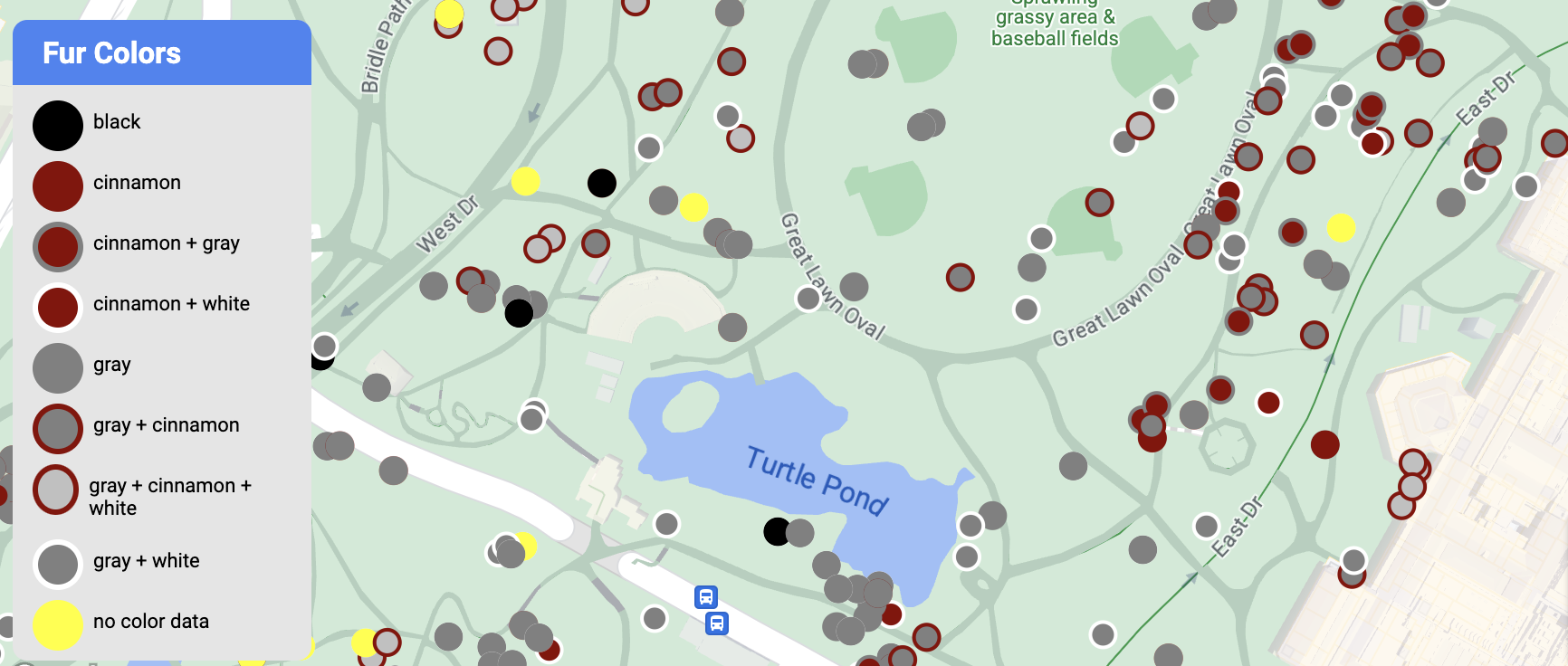
This example shows an approach to styling point geometry based data features.
### About the dataset
The dataset used in this example is the result of a [2018 survey of
squirrels](https://data.cityofnewyork.us/Environment/2018-Squirrel-Census-Fur-Color-Map/fak5-wcft)
in Central Park, New York City. In the following excerpt from the CSV data file,
columns `x` and `y` are used for geography; a `LatLng` column is included, but
it's not used in this example because datasets only support the
[WKT format](https://en.wikipedia.org/wiki/Well-known_text_representation_of_geometry)
if the column is named `WKT`. For more information about the supported formats
for location, see
[CSV requirements](https://developers.google.com/maps/documentation/datasets/create.md.txt#dataset-csv-requirements).
The squirrel census dataset contains a nice variety of different data points
relating to the observed fur color and behavior of squirrels (be sure to scroll
horizontally to see it all).
| X | Y | UniqueSquirrelID | Hectare | Shift | Date | Hectare SquirrelNumber | Age | PrimaryFurColor | HighlightFurColor | CombinationofPrimaryandHighlightColor | Colornotes | Location | AboveGroundSighter Measurement | SpecificLocation | Running | Chasing | Climbing | Eating | Foraging | Other Activities | Kuks | Quaas | Moans | Tailflags | Tailtwitches | Approaches | Indifferent | Runsfrom | OtherInteractions | LatLng |
|---|---|---|---|---|---|---|---|---|---|---|---|---|---|---|---|---|---|---|---|---|---|---|---|---|---|---|---|---|---|---|
| -73.9561344937861 | 40.7940823884086 | 37F-PM-1014-03 | 37F | PM | 10142018 | 3 | | | | + | | | | | false | false | false | false | false | | false | false | false | false | false | false | false | false | | POINT (-73.9561344937861 40.7940823884086) |
| -73.9688574691102 | 40.7837825208444 | 21B-AM-1019-04 | 21B | AM | 10192018 | 4 | | | | + | | | | | false | false | false | false | false | | false | false | false | false | false | false | false | false | | POINT (-73.9688574691102 40.7837825208444) |
| -73.9742811484852 | 40.775533619083 | 11B-PM-1014-08 | 11B | PM | 10142018 | 8 | | Gray | | Gray+ | | Above Ground | 10 | | false | true | false | false | false | | false | false | false | false | false | false | false | false | | POINT (-73.97428114848522 40.775533619083) |
| -73.9596413903948 | 40.7903128889029 | 32E-PM-1017-14 | 32E | PM | 10172018 | 14 | Adult | Gray | | Gray+ | Nothing selected as Primary. Gray selected as Highlights. Made executive adjustments. | | | | false | false | false | true | true | | false | false | false | false | false | false | false | true | | POINT (-73.9596413903948 40.7903128889029) |
| -73.9702676472613 | 40.7762126854894 | 13E-AM-1017-05 | 13E | AM | 10172018 | 5 | Adult | Gray | Cinnamon | Gray+Cinnamon | | Above Ground | | on tree stump | false | false | false | false | true | | false | false | false | false | false | false | false | false | | POINT (-73.9702676472613 40.7762126854894) |
| -73.9683613516225 | 40.7725908847499 | 11H-AM-1010-03 | 11H | AM | 10102018 | 3 | Adult | Cinnamon | White | Cinnamon+White | | | | | false | false | false | false | true | | false | false | false | false | true | false | true | false | | POINT (-73.9683613516225 40.7725908847499) |
| -73.9541201789795 | 40.7931811701082 | 36H-AM-1010-02 | 36H | AM | 10102018 | 2 | Adult | Gray | | Gray+ | just outside hectare | Ground Plane | FALSE | | false | false | false | false | true | | false | false | false | false | false | false | false | false | | POINT (-73.9541201789795 40.7931811701082) |
### Style point data features
The code in this example takes the approach of styling the fill color and
stroke color for each point based on the `CombinationofPrimaryandHighlightColor`
attribute, which combines the primary and secondary fur colors for each
squirrel.
### Kotlin
```java
private fun styleDatasetsLayer() {
// Create the style factory function.
val styleFactory = FeatureLayer.StyleFactory { feature: Feature ->
// Set default colors to to yellow and point radius to 8.
var fillColor = Color.YELLOW
var strokeColor = Color.YELLOW
var pointRadius = 8F
// Check if the feature is an instance of DatasetFeature.
if (feature is DatasetFeature) {
val furColors: MutableMap = feature.getDatasetAttributes()
// Determine CombinationofPrimaryandHighlightColor attribute.
val furColor = furColors!!["CombinationofPrimaryandHighlightColor"]
when (furColor) {
"Black+" -> {
fillColor = Color.BLACK
strokeColor= Color.BLACK
}
"Cinnamon+" -> {
fillColor = -0x750000
strokeColor= -0x750000
}
"Cinnamon+Gray" -> {
fillColor = -0x750000
strokeColor= -0x750000
pointRadius = 6F
}
"Cinnamon+White" -> {
fillColor = -0x750000
strokeColor= Color.WHITE
pointRadius = 6F
}
"Gray+" -> fillColor = Color.GRAY
"Gray+Cinnamon" -> {
fillColor = Color.GRAY
strokeColor= -0x750000
pointRadius = 6F
}
"Gray+Cinnamon, White" -> {
fillColor = Color.LTGRAY
strokeColor= -0x750000
pointRadius = 6F
}
"Gray+White" -> {
fillColor = Color.GRAY
strokeColor= Color.WHITE
pointRadius = 6F
}
}
return@StyleFactory FeatureStyle.Builder()
.fillColor(fillColor)
.strokeColor(strokeColor)
.pointRadius(pointRadius)
.build()
}
return@StyleFactory null
}
// Apply the style factory function to the feature layer.
datasetLayer?.setFeatureStyle(styleFactory)
}
```
### Java
```java
private void styleDatasetsLayer() {
// Create the style factory function.
FeatureLayer.StyleFactory styleFactory = (Feature feature) -> {
// Check if the feature is an instance of DatasetFeature.
if (feature instanceof DatasetFeature) {
// Determine CombinationofPrimaryandHighlightColor attribute.
Map furColors = ((DatasetFeature) feature).getDatasetAttributes();
String furColor = furColors.get("CombinationofPrimaryandHighlightColor");
// Set default colors to to yellow and point radius to 8.
int fillColor = Color.YELLOW;
int strokeColor = Color.YELLOW;
int pointRadius = 8;
switch (furColor) {
case "Black+":
fillColor = Color.BLACK;
strokeColor = Color.BLACK;
break;
case "Cinnamon+":
fillColor = 0xff8b0000;
strokeColor = 0xff8b0000;
break;
case "Cinnamon+Gray":
fillColor = 0xff8b0000;
strokeColor = Color.GRAY;
pointRadius = 6;
break;
case "Cinnamon+White":
fillColor = 0xff8b0000;
strokeColor = Color.WHITE;
pointRadius = 6;
break;
case "Gray+":
fillColor = Color.GRAY;
strokeColor = Color.GRAY;
break;
case "Gray+Cinnamon":
fillColor = Color.GRAY;
strokeColor = 0xff8b0000;
pointRadius = 6;
break;
case "Gray+Cinnamon, White":
fillColor = Color.LTGRAY;
strokeColor = 0xff8b0000;
pointRadius = 6;
break;
case "Gray+White":
fillColor = Color.GRAY;
strokeColor = Color.WHITE;
pointRadius = 6;
break;
default:
fillColor = Color.YELLOW;
strokeColor = Color.YELLOW;
pointRadius = 8;
}
return new FeatureStyle.Builder()
.fillColor(fillColor)
.strokeColor(strokeColor)
.pointRadius(pointRadius)
.build();
}
return null;
};
// Apply the style factory function to the feature layer.
datasetLayer.setFeatureStyle(styleFactory);
}
```
## Polygon data styling example
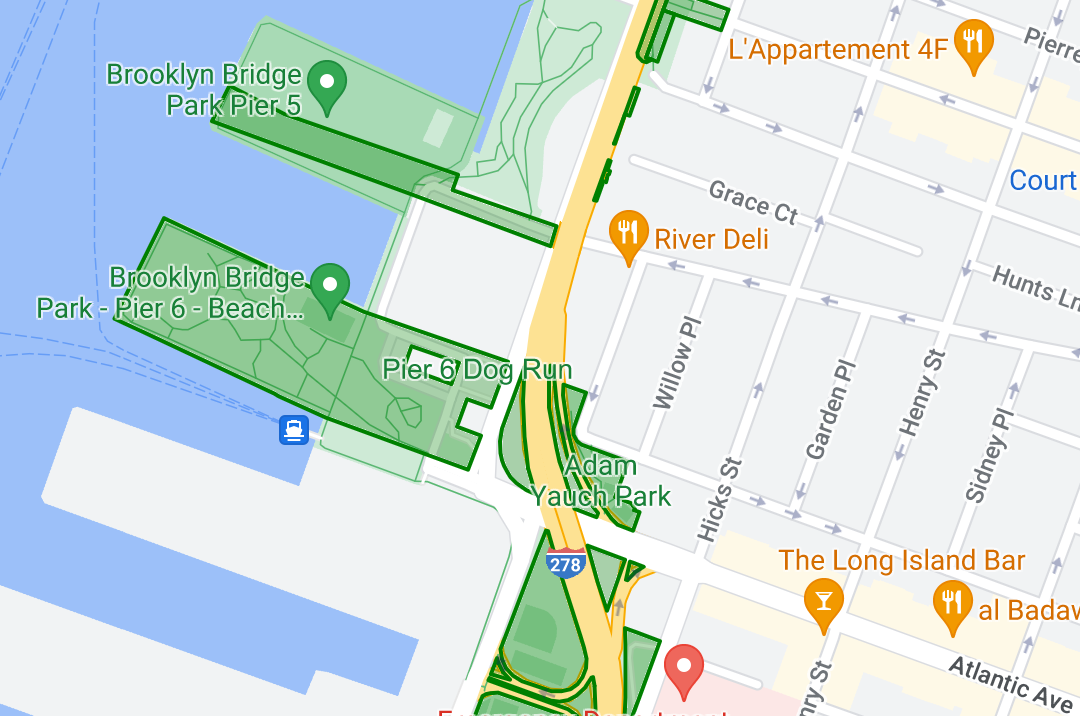
This example shows an approach to styling polygon geometry based data features.
### About the dataset
The dataset used in this example depicts [parks in New York City](https://data.cityofnewyork.us/Recreation/Parks-Properties/enfh-gkve).
The following excerpt from the dataset GeoJSON file shows a representative
feature entry.
```json
{
"type": "Feature",
"properties": {
"jurisdiction": "DPR",
"mapped": "False",
"zipcode": "11356",
"acres": "0.05",
"location": "College Pl., College Pt. Blvd., bet. 11 Ave. and 12 Ave.",
"nys_assembly": "27",
"councildistrict": "19",
"url": "http://www.nycgovparks.org/parks/Q042/",
"typecategory": "Triangle/Plaza",
"us_congress": "14",
"eapply": "Poppenhusen Park",
"parentid": "Q-07",
"gispropnum": "Q042",
"retired": "false",
"communityboard": "407",
"objectid": "6248",
"globalid": "F4810079-CBB9-4BE7-BBFA-B3C0C35D5DE5",
"name311": "Poppenhusen Park",
"department": "Q-07",
"pip_ratable": "true",
"subcategory": "Sitting Area/Triangle/Mall",
"precinct": "109",
"permit": "true",
"acquisitiondate": null,
"omppropid": "Q042",
"gisobjid": "100000301",
"signname": "Poppenhusen Park",
"address": null,
"permitparent": "Q-07",
"class": "PARK",
"nys_senate": "11",
"permitdistrict": "Q-07",
"borough": "Q",
"waterfront": "false"
},
"geometry": {
"type": "MultiPolygon",
"coordinates": [
[
[
[
-73.84575702371716,
40.78796240884273
],
[
-73.84593393292693,
40.78796857347548
],
[
-73.84577256469657,
40.787651355629556
],
[
-73.84575702371716,
40.78796240884273
]
]
]
]
}
},
```
### Style polygon data features
The code in this example applies special coloring to data features associated
with a `typecategory` of "Undeveloped" or "Parkway", and colors all other
features green.
### Kotlin
```java
private fun styleDatasetsLayer() {
// Create the style factory function.
val styleFactory = FeatureLayer.StyleFactory { feature: Feature ->
// Check if the feature is an instance of DatasetFeature.
if (feature is DatasetFeature) {
// Determine the value of the typecategory attribute.
val typeCategories: MutableMap = feature.getDatasetAttributes()
val typeCategory = typeCategories!!["typecategory"]
// Set default colors to green.
var fillColor = 0x4000ff00
var strokeColor = 0xff00ff00
when (typeCategory) {
"Undeveloped" -> {
// Color undeveloped areas blue.
fillColor = 0x400000ff
strokeColor = 0x400000ff
}
"Parkway" -> {
// Color parkway areas red.
fillColor = 0x40ff0000
strokeColor = 0x40ff0000
}
else -> {
// Color all other areas green.
fillColor = 0x4000ff00
strokeColor = 0xff00ff00
}
}
return@StyleFactory FeatureStyle.Builder()
.fillColor(fillColor)
.strokeColor(strokeColor)
.strokeWidth(2F)
.build()
}
return@StyleFactory null
}
// Apply the style factory function to the feature layer.
datasetLayer?.setFeatureStyle(styleFactory)
}
```
### Java
```java
private void styleDatasetsLayer() {
// Create the style factory function.
FeatureLayer.StyleFactory styleFactory = (Feature feature) -> {
// Check if the feature is an instance of DatasetFeature.
if (feature instanceof DatasetFeature) {
// Determine the value of the typecategory attribute.
Map typeCategories = ((DatasetFeature) feature).getDatasetAttributes();
String typeCategory = typeCategories.get("typecategory");
// Set default colors to green.
int fillColor = 0x4000ff00;
int strokeColor = 0xff00ff00;
switch (typeCategory) {
case "Undeveloped":
// Color undeveloped areas blue.
fillColor = 0x400000ff;
strokeColor = 0xff0000ff;
break;
case "Parkway":
// Color parkway areas red.
fillColor = 0x40ff0000;
strokeColor = 0xffff0000;
break;
default:
// Color all other areas green.
fillColor = 0x4000ff00;
strokeColor = 0xff00ff00;
}
return new FeatureStyle.Builder()
.fillColor(fillColor)
.strokeColor(strokeColor)
.strokeWidth(2)
.build();
}
return null;
};
// Apply the style factory function to the feature layer.
datasetLayer.setFeatureStyle(styleFactory);
}
```
## Polyline data styling example
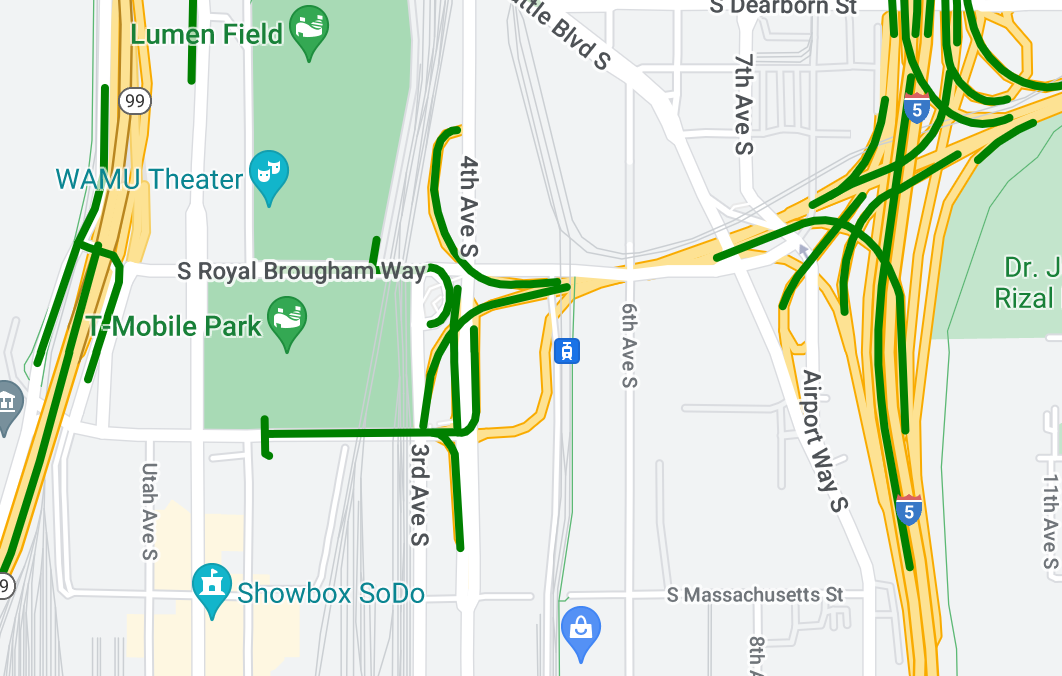
This example shows an approach to styling polyline geometry based data features.
### About the dataset
The dataset used in this example shows
[bridges in the Seattle area](https://data-seattlecitygis.opendata.arcgis.com/datasets/9db5967e01224efcafbfbb64b06ff68f_0/explore?location=47.642165,-122.245150,12.64).
The following excerpt from the dataset GeoJSON file shows a representative
feature entry.
```json
{
"type": "Feature",
"properties": {
"OBJECTID": 1,
"COMPTYPE": 66,
"COMPKEY": 515774,
"HANSEGKEY": 489781,
"UNITID": "BRG-935",
"UNITTYPE": " ",
"BRGUNITID": "BRG-935",
"UNITDESC_BRG": "YALE AVE BR REV LANE OC ",
"UNITDESC_SEG": "HOWELL ST ON RP BETWEEN HOWELL ST AND I5 SB ",
"INSTDATE": null,
"EXPDATE": null,
"STATUS": " ",
"STATUSDT": null,
"CONDITION": " ",
"CONDDT": null,
"OWN": " ",
"LSTVERIFY": null,
"MAINTBY": " ",
"ADDBY": "GARCIAA",
"ADDDTTM": "2010-01-21T00:00:00Z",
"MODBY": null,
"MODDTTM": null,
"BR_NBR": 935,
"BR_CODE": " 935",
"BR_TYPE": "ST",
"BR_NAME": "YALE AVE BR REV LANE OC",
"BR_FACILITIES": "YALE AVE-SR 5 ON RAMP",
"BR_FEATURES": "SR 5 REV LANE",
"BR_RATING": 0,
"BR_INSET": 1,
"BR_GEO": "DT",
"BR_OWNER": "DOT",
"BR_OWNER_NAME": "State of Washington",
"GEOBASID": 0,
"XGEOBASID": 0,
"GISSEGKEY": 489781,
"EARTHQUAKE_RESPONSE_TEAM": " ",
"SHAPE_Length": 220.11891836147655
},
"geometry": {
"type": "LineString",
"coordinates": [
[
-122.329201929090928,
47.616910448708538
],
[
-122.329206483407461,
47.616976719821004
],
[
-122.32921802149356,
47.617042137515213
],
[
-122.329236413912909,
47.617105967923777
],
[
-122.329261454336034,
47.617167494985758
],
[
-122.329292861855023,
47.617226028479571
],
[
-122.329330284134699,
47.617280911766009
],
[
-122.329373301365223,
47.617331529154569
],
[
-122.329421430971635,
47.617377312810319
],
[
-122.329474133027375,
47.617417749124023
],
[
-122.32953081631139,
47.617452384473893
]
]
}
},
```
### Style polyline data features
The following snippet applies the same style to directly to all data features.
### Kotlin
```java
private fun styleDatasetsLayer() {
// Create the style factory function.
val styleFactory = FeatureLayer.StyleFactory { feature: Feature ->
// Check if the feature is an instance of DatasetFeature.
if (feature is DatasetFeature) {
return@StyleFactory FeatureStyle.Builder()
// Define a style with green stroke with a width of 4.
.strokeColor(0xff00ff00.toInt())
.strokeWidth(4F)
.build()
}
return@StyleFactory null
}
// Apply the style factory function to the feature layer.
datasetLayer?.setFeatureStyle(styleFactory)
}
```
### Java
```java
private void styleDatasetsLayer() {
// Create the style factory function.
FeatureLayer.StyleFactory styleFactory = (Feature feature) -> {
// Check if the feature is an instance of DatasetFeature.
if (feature instanceof DatasetFeature) {
return new FeatureStyle.Builder()
// Define a style with green stroke with a width of 4.
.strokeColor(0xff00ff00)
.strokeWidth(4)
.build();
}
return null;
};
// Apply the style factory function to the feature layer.
datasetLayer.setFeatureStyle(styleFactory);
}
```