

API ของ WebView สำหรับโฆษณาจะทำให้สัญญาณของแอปพร้อมใช้งานสำหรับแท็กใน CustomTabSession
ซึ่งจะช่วยปรับปรุงการสร้างรายได้สำหรับผู้เผยแพร่โฆษณาบนเว็บที่ให้เนื้อหา
และปกป้องผู้ลงโฆษณาจากสแปม
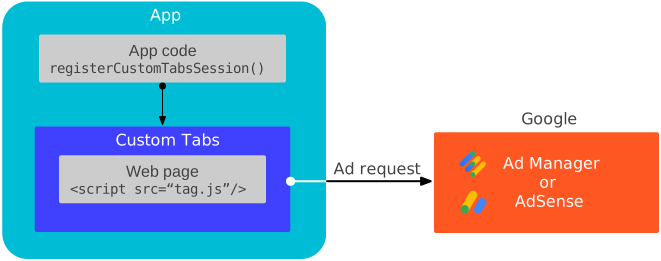
วิธีการทำงาน
การสื่อสารกับ Google Mobile Ads SDK จะเกิดขึ้นเมื่อมีการตอบสนองต่อเหตุการณ์โฆษณาที่ทริกเกอร์โดยรายการต่อไปนี้เท่านั้น
Google Mobile Ads SDK ช่วยอำนวยความสะดวกในการสื่อสารโดยการเปิดช่อง postMessage
กับ CustomTabsSession ที่เฟรมเวิร์ก Android จัดเตรียมไว้ให้
ข้อกำหนดเบื้องต้น
- Google Mobile Ads SDK 23.0.0 ขึ้นไป
- การติดตั้งใช้งาน Chrome Custom Tabs ที่มีอยู่ในแอปบนอุปกรณ์เคลื่อนที่ ดูการวอร์มอัปและการดึงข้อมูลล่วงหน้า: การใช้ บริการ Custom Tabs
- เชื่อมโยงแอปบนอุปกรณ์เคลื่อนที่กับเว็บไซต์โดยใช้ลิงก์เนื้อหาดิจิทัล (Digital Asset Links) ดูวิธีการได้ที่PostMessage สำหรับ TWA
เพิ่มแท็ก
<meta-data>ต่อไปนี้ในไฟล์AndroidManifest.xmlเพื่อ ข้ามการตรวจสอบAPPLICATION_IDหากคุณพลาดขั้นตอนนี้และไม่ได้ระบุแท็ก<meta-data>Google Mobile Ads SDK จะแสดงIllegalStateExceptionเมื่อเริ่มแอป<!-- Bypass APPLICATION_ID check for web view APIs for ads --> <meta-data android:name="com.google.android.gms.ads.INTEGRATION_MANAGER" android:value="webview"/>
การใช้งาน
ในการติดตั้งใช้งาน Chrome Custom Tabs ให้แก้ไขโค้ดใน
onCustomTabsServiceConnected()
callback แทนที่ newSession()
ด้วย MobileAds.registerCustomTabsSession() ซึ่งจะสร้างการเชื่อมต่อกับช่อง
postMessage เพื่อเพิ่มข้อมูลแท็กโฆษณาด้วยสัญญาณ SDK ต้องมีลิงก์เนื้อหาดิจิทัล
เพื่อเชื่อมต่อช่อง postMessage คุณเลือกตั้งค่าพารามิเตอร์
CustomTabsCallback
เพื่อฟังเหตุการณ์ของแท็บที่กําหนดเองของ Chrome ได้
คุณยังคงส่งข้อความจาก CustomTabsSession ที่ได้รับ
จาก Google Mobile Ads SDK ได้ แต่พอร์ตอาจเปลี่ยนแปลงเมื่อ SDK ร้องขอ
ช่องใหม่ที่จะลบล้างช่องที่มีอยู่
ข้อมูลโค้ดต่อไปนี้แสดงวิธีลงทะเบียน CustomTabsSession โดยใช้ Google Mobile Ads SDK
Kotlin
import com.google.android.gms.ads.MobileAds

class MainActivity : ComponentActivity() {
  private var customTabsClient: CustomTabsClient? = null
  private var customTabsSession: CustomTabsSession? = null

  override fun onCreate(savedInstanceState: Bundle?) {
    super.onCreate(savedInstanceState)
    setContentView(R.layout.activity_main)

    // Get the default browser package name, this will be null if
    // the default browser does not provide a CustomTabsService.
    val packageName = CustomTabsClient.getPackageName(applicationContext, null);
    if (packageName == null) {
      // Do nothing as service connection is not supported.
      return
    }

    CustomTabsClient.bindCustomTabsService(
      applicationContext,
      packageName,
      object : CustomTabsServiceConnection() {
        override fun onCustomTabsServiceConnected(
          name: ComponentName, client: CustomTabsClient,
          ) {
            customTabsClient = client

            // Warm up the browser process.
            customTabsClient?.warmup(0L)
            // Create a new browser session using the Google Mobile Ads SDK.
            customTabsSession = MobileAds.registerCustomTabsSession(
              this@MainActivity.applicationContext,
              client,
              // Checks the "Digital Asset Link" to connect the postMessage channel.
              ORIGIN,
              // Optional parameter to receive the delegated callbacks.
              customTabsCallback
            )

            // Create a new browser session if the Google Mobile Ads SDK is
            // unable to create one.
            if (customTabsSession == null) {
              customTabsSession = client.newSession(customTabsCallback)
            }

            // Pass the custom tabs session into the intent.
            val customTabsIntent = CustomTabsIntent.Builder(customTabsSession).build()
            customTabsIntent.launchUrl(this@MainActivity,
                                      Uri.parse("YOUR_URL"))
          }

          override fun onServiceDisconnected(componentName: ComponentName) {
            // Remove the custom tabs client and custom tabs session.
            customTabsClient = null
            customTabsSession = null
          }
      })
  }

  // Listen for events from the CustomTabsSession delegated by the Google Mobile Ads SDK.
  private val customTabsCallback: CustomTabsCallback = object : CustomTabsCallback() {
    @Synchronized
    override fun onNavigationEvent(navigationEvent: Int, extras: Bundle?) {
      // Called when a navigation event happens.
    }

    @Synchronized
    override fun onMessageChannelReady(extras: Bundle?) {
      // Called when the channel is ready for sending and receiving messages on both
      // ends.
      // This frequently happens, such as each time the SDK requests a
      // new channel.
    }

    @Synchronized
    override fun onPostMessage(message: String, extras: Bundle?) {
      // Called when a tab controlled by this CustomTabsSession has sent a postMessage.
    }

    override fun onRelationshipValidationResult(
      relation: Int, requestedOrigin: Uri, result: Boolean, extras: Bundle?
    ) {
      // Called when a relationship validation result is available.
    }

    override fun onActivityResized(height: Int, width: Int, extras: Bundle) {
      // Called when the tab is resized.
    }

    override fun extraCallback(callbackName: String, args: Bundle?) {

    }

    override fun extraCallbackWithResult(callbackName: String, args: Bundle?): Bundle? {
      return null
    }
  }

  companion object {
    // Replace this URL with an associated website.
    const val ORIGIN = "https://www.google.com"
  }
}
Java
import com.google.android.gms.ads.MobileAds;

class MainActivity extends ComponentActivity {
  // Replace this URL with an associated website.
  private static final String ORIGIN = "https://www.google.com";
  private CustomTabsClient customTabsClient;
  private CustomTabsSession customTabsSession;

  @Override
  protected void onCreate(@Nullable Bundle savedInstanceState) {
    super.onCreate(savedInstanceState);

    // Get the default browser package name, this will be null if
    // the default browser does not provide a CustomTabsService.
    String packageName = CustomTabsClient.getPackageName(getApplicationContext(), null);
    if (packageName == null) {
      // Do nothing as service connection is not supported.
      return;
    }

    CustomTabsClient.bindCustomTabsService(
        getApplicationContext(),
        packageName,
        new CustomTabsServiceConnection() {
          @Override
          public void onCustomTabsServiceConnected(@NonNull ComponentName name,
              @NonNull CustomTabsClient client) {
            customTabsClient = client;

            // Warm up the browser process.
            customTabsClient.warmup(0);
            // Create a new browser session using the Google Mobile Ads SDK.
            customTabsSession = MobileAds.registerCustomTabsSession(
                MainActivity.this.getApplicationContext(),
                client,
                // Checks the "Digital Asset Link" to connect the postMessage channel.
                ORIGIN,
                // Optional parameter to receive the delegated callbacks.
                customTabsCallback);

            // Create a new browser session if the Google Mobile Ads SDK is
            // unable to create one.
            if (customTabsSession == null) {
              customTabsSession = client.newSession(customTabsCallback);
            }

            // Pass the custom tabs session into the intent.
            CustomTabsIntent intent = new CustomTabsIntent.Builder(customTabsSession).build();
            intent.launchUrl(MainActivity.this, Uri.parse("YOUR_URL"));
          }

          @Override
          public void onServiceDisconnected(ComponentName componentName) {
            // Remove the custom tabs client and custom tabs session.
            customTabsClient = null;
            customTabsSession = null;
          }
        }

    );
  }

  // Listen for events from the CustomTabsSession delegated by the Google Mobile Ads SDK.
  private final CustomTabsCallback customTabsCallback = new CustomTabsCallback() {
    @Override
    public void onNavigationEvent(int navigationEvent, @Nullable Bundle extras) {
      // Called when a navigation event happens.
      super.onNavigationEvent(navigationEvent, extras);
    }

    @Override
    public void onMessageChannelReady(@Nullable Bundle extras) {
      // Called when the channel is ready for sending and receiving messages on both
      // ends.
      // This frequently happens, such as each time the SDK requests a
      // new channel.
      super.onMessageChannelReady(extras);
    }

    @Override
    public void onPostMessage(@NonNull String message, @Nullable Bundle extras) {
      // Called when a tab controlled by this CustomTabsSession has sent a postMessage.
      super.onPostMessage(message, extras);
    }

    @Override
    public void onRelationshipValidationResult(int relation, @NonNull Uri requestedOrigin,
        boolean result, @Nullable Bundle extras) {
      // Called when a relationship validation result is available.
      super.onRelationshipValidationResult(relation, requestedOrigin, result, extras);
    }

    @Override
    public void onActivityResized(int height, int width, @NonNull Bundle extras) {
      // Called when the tab is resized.
      super.onActivityResized(height, width, extras);
    }

    @Override
    public void extraCallback(@NonNull String callbackName, @Nullable Bundle args) {
      super.extraCallback(callbackName, args);
    }

    @Nullable
    @Override
    public Bundle extraCallbackWithResult(@NonNull String callbackName, @Nullable Bundle args) {
      return super.extraCallbackWithResult(callbackName, args);
    }
  };
}