

หน้านี้อธิบายวิธีตั้งค่าและตอบกลับคำสั่งในฐานะแอป Google Chat
คำสั่งช่วยให้ผู้ใช้ค้นพบและใช้ฟีเจอร์หลักของแอป Chat ได้ มีเพียงแอป Chat เท่านั้นที่จะดูเนื้อหาของคำสั่งได้ ตัวอย่างเช่น หากผู้ใช้ส่งข้อความที่มีคำสั่งเครื่องหมายทับ ข้อความนั้นจะแสดงต่อผู้ใช้และแอป Chat เท่านั้น
หากต้องการตัดสินใจว่าจะสร้างคำสั่งหรือไม่ และทำความเข้าใจวิธีออกแบบ การโต้ตอบของผู้ใช้ โปรดดูหัวข้อ กำหนดเส้นทางของผู้ใช้ทั้งหมด
ประเภทของคำสั่งแอป Chat
คุณสามารถสร้างคำสั่งแอป Chat เป็นคำสั่งเครื่องหมายทับ คำสั่งด่วน หรือการดำเนินการกับข้อความ หากต้องการใช้คำสั่งแต่ละประเภท ผู้ใช้สามารถทำดังนี้-
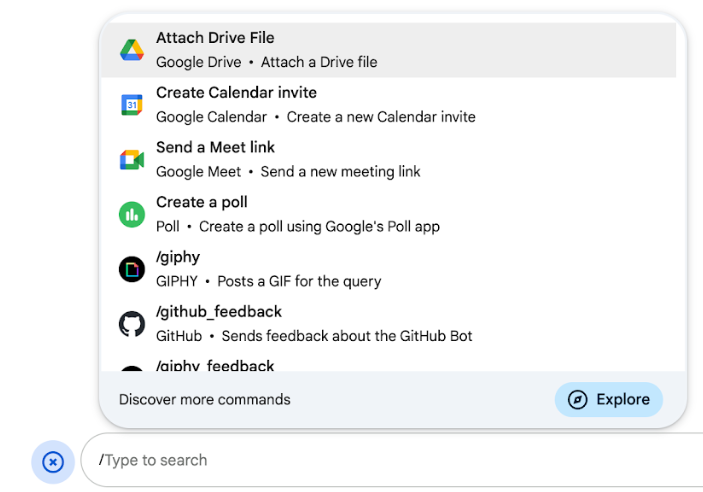
คำสั่งเครื่องหมายทับ: ผู้ใช้สามารถเลือกคำสั่งเครื่องหมายทับจากเมนูหรือพิมพ์เครื่องหมายทับ (
/) แล้วตามด้วยข้อความที่กำหนดไว้ล่วงหน้า เช่น/aboutโดยปกติแล้วแอป Chat จะต้องมีข้อความอาร์กิวเมนต์สำหรับคำสั่งเครื่องหมายทับสร้างคำสั่งเครื่องหมายทับหากแอป Chat ต้องได้รับข้อมูลเพิ่มเติมจากผู้ใช้ เช่น คุณสามารถสร้างคำสั่งเครื่องหมายทับที่ชื่อว่า
/searchซึ่งจะทำงานหลังจากที่ผู้ใช้ป้อนวลีที่จะ ค้นหา เช่น/search receipts -
คำสั่งด่วน: ผู้ใช้ใช้คำสั่งโดยเปิดเมนูจากพื้นที่ตอบกลับ ของข้อความแชท หากต้องการใช้คำสั่ง ให้คลิกเพิ่ม
 แล้ว
เลือกคำสั่งจากเมนู
แล้ว
เลือกคำสั่งจากเมนู
สร้างคำสั่งด่วนหากแอป Chat ตอบกลับผู้ใช้ได้ทันที โดยไม่ต้องรอข้อมูลเพิ่มเติม เช่น คุณสามารถสร้างคำสั่งด่วนที่ชื่อว่า Random image ซึ่งจะตอบกลับด้วยรูปภาพทันที
-
การดำเนินการกับข้อความ: ผู้ใช้ใช้การดำเนินการกับข้อความโดยวางเมาส์เหนือข้อความแล้ว คลิกเมนู 3 จุด หากต้องการใช้คำสั่ง ให้เปิดเมนู 3 จุดแล้วเลือก คำสั่งจากเมนู
สร้างการดำเนินการที่แนะนำหากแอป Chat สามารถดำเนินการตามบริบทของข้อความได้
รูปภาพต่อไปนี้แสดงวิธีที่ผู้ใช้ค้นพบเมนูสำหรับคำสั่งเครื่องหมายทับและคำสั่งด่วน รวมถึงการดำเนินการกับข้อความ

ข้อกำหนดเบื้องต้น
HTTP
ส่วนเสริม Google Workspace ที่ขยาย Google Chat หากต้องการสร้างส่วนเสริม ให้ทำตามคู่มือเริ่มต้นใช้งานฉบับย่อของ HTTP
Apps Script
ส่วนเสริม Google Workspace ที่ขยาย Google Chat หากต้องการสร้างส่วนเสริม ให้ทำตามคู่มือเริ่มต้นใช้งานฉบับย่อของ Apps Script
ตั้งค่าคำสั่ง
ส่วนนี้อธิบายวิธีทำตามขั้นตอนต่อไปนี้เพื่อตั้งค่าคำสั่ง
- สร้างชื่อและคำอธิบายสำหรับคำสั่ง
- กำหนดค่าคำสั่งในคอนโซล Google Cloud
ตั้งชื่อและอธิบายคำสั่ง
ชื่อคำสั่งคือสิ่งที่ผู้ใช้พิมพ์หรือเลือกเพื่อเรียกใช้แอป Chat นอกจากนี้ คำอธิบายสั้นๆ จะปรากฏใต้ชื่อเพื่อแจ้งให้ผู้ใช้ทราบเพิ่มเติมเกี่ยวกับวิธีใช้คำสั่ง

เมื่อเลือกชื่อและคำอธิบายสำหรับคำสั่ง ให้พิจารณาคำแนะนำต่อไปนี้
วิธีตั้งชื่อคำสั่ง
- ใช้คำหรือวลีที่สั้น สื่อความหมาย และกระตุ้นให้ดำเนินการเพื่อให้ผู้ใช้เข้าใจคำสั่งได้ชัดเจน
เช่น แทนที่จะใช้ชื่อ
Create a reminderให้ใช้Remind me. - พิจารณาใช้ชื่อที่ไม่ซ้ำกันหรือชื่อทั่วไปสำหรับคำสั่ง หากคำสั่งอธิบายการโต้ตอบหรือฟีเจอร์ทั่วไป คุณสามารถใช้ชื่อทั่วไปที่ผู้ใช้รู้จักและคาดหวังได้ เช่น
SettingsหรือFeedbackไม่เช่นนั้น ให้ลองใช้ชื่อคำสั่งที่ไม่ซ้ำกัน เนื่องจากหากชื่อคำสั่งเหมือนกับแอป Chat อื่นๆ ผู้ใช้จะต้องกรองคำสั่งที่คล้ายกันเพื่อค้นหาและใช้คำสั่งของคุณ
วิธีอธิบายคำสั่ง
- อธิบายคำสั่งให้สั้นและชัดเจนเพื่อให้ผู้ใช้ทราบว่าจะเกิดอะไรขึ้นเมื่อใช้คำสั่ง
- แจ้งให้ผู้ใช้ทราบหากมีข้อกำหนดด้านการจัดรูปแบบสำหรับคำสั่ง เช่น หากคุณ
สร้างคำสั่งเครื่องหมายทับที่ต้องใช้ข้อความอาร์กิวเมนต์ ให้ตั้งคำอธิบายเป็นข้อความ เช่น
Remind me to do [something] at [time] - แจ้งให้ผู้ใช้ทราบว่าแอป Chat จะตอบกลับทุกคนในพื้นที่ทำงานหรือ
ตอบกลับผู้ใช้ที่เรียกใช้คำสั่งแบบส่วนตัว เช่น สำหรับคำสั่งด่วน
Aboutคุณสามารถอธิบายได้ว่าLearn about this app (Only visible to you)
กำหนดค่าคำสั่งในคอนโซล Google Cloud
หากต้องการสร้างคำสั่งเครื่องหมายทับ คำสั่งด่วน หรือการดำเนินการที่แนะนำ ให้ระบุข้อมูลเกี่ยวกับคำสั่งหรือการดำเนินการในการกำหนดค่าของแอป Chat สำหรับ Google Chat API
หากต้องการกำหนดค่าคำสั่งใน Google Chat API ให้ทำตามขั้นตอนต่อไปนี้
ในคอนโซล Google Cloud ให้คลิกเมนู > API และบริการ > API และบริการที่เปิดใช้ > Google Chat API
คลิกการกำหนดค่า
ในส่วนการตั้งค่าการเชื่อมต่อ ให้ไปที่ทริกเกอร์ แล้วระบุรายละเอียดอุปกรณ์ปลายทาง คุณต้องใช้ทริกเกอร์นี้ในส่วนถัดไปเพื่อตอบกลับคำสั่ง
- URL ของอุปกรณ์ปลายทาง HTTP: คุณสามารถระบุ URL ของอุปกรณ์ปลายทาง HTTP ทั่วไปได้ที่นี่ หรือหากต้องการใช้อุปกรณ์ปลายทาง HTTP ที่แตกต่างกันสำหรับทริกเกอร์ต่างๆ ให้ระบุอุปกรณ์ปลายทางในช่องคำสั่งแอป โดยตรง
- Apps Script: ป้อนรหัสการใช้งานจริงของ Apps Script โดยค่าเริ่มต้น ระบบจะเรียกใช้ฟังก์ชัน
onAppCommandหากต้องการใช้ฟังก์ชัน Apps Script อื่น ให้ระบุชื่อฟังก์ชันที่กำหนดเองในช่องคำสั่งแอป
ในส่วนคำสั่ง ให้คลิกเพิ่มคำสั่ง
ป้อนข้อมูลต่อไปนี้เกี่ยวกับคำสั่ง
- รหัสคำสั่ง: ตัวเลขตั้งแต่ 1 ถึง 1000 ที่แอป Chat ใช้เพื่อจดจำคำสั่งและแสดงผลการตอบกลับ
- คำอธิบาย: ข้อความที่อธิบายวิธีใช้และจัดรูปแบบคำสั่ง คำอธิบายมีความยาวได้ไม่เกิน 50 ตัวอักษร
- ประเภทคำสั่ง: เลือกคำสั่งด่วน คำสั่งเครื่องหมายทับ หรือการดำเนินการที่แนะนำ
- ระบุชื่อสำหรับคำสั่ง
- ชื่อคำสั่งด่วน: ชื่อที่แสดงซึ่งผู้ใช้เลือกจากเมนูเพื่อเรียกใช้คำสั่ง มีความยาวได้ไม่เกิน 50 ตัวอักษรและมีอักขระพิเศษได้ เช่น
Remind me - ชื่อคำสั่งเครื่องหมายทับ: ข้อความที่ผู้ใช้พิมพ์เพื่อเรียกใช้คำสั่งในข้อความ ต้องขึ้นต้นด้วยเครื่องหมายทับ มีเพียงข้อความ และมีความยาวได้ไม่เกิน 50 ตัวอักษร เช่น
/remindMe - ชื่อการดำเนินการที่แนะนำ: ชื่อที่แสดงซึ่งผู้ใช้เลือกจากเมนูเพื่อเรียกใช้การดำเนินการที่แนะนำ มีความยาวได้ไม่เกิน 50 ตัวอักษรและมีอักขระพิเศษได้ เช่น
Remind me
- ชื่อคำสั่งด่วน: ชื่อที่แสดงซึ่งผู้ใช้เลือกจากเมนูเพื่อเรียกใช้คำสั่ง มีความยาวได้ไม่เกิน 50 ตัวอักษรและมีอักขระพิเศษได้ เช่น
ไม่บังคับ: ข้อความแจ้งเตือนการโหลด: ข้อความแจ้งเตือนแบบป๊อปอัปที่จะ แสดงต่อผู้ใช้ขณะที่การดำเนินการกับข้อความกำลังทำงาน ใช้ได้เฉพาะกับการดำเนินการกับข้อความที่ไม่เปิดกล่องโต้ตอบ
ไม่บังคับ: หากต้องการให้แอป Chat ตอบกลับคำสั่งด้วยกล่องโต้ตอบ ให้เลือกช่องทำเครื่องหมายเปิดกล่องโต้ตอบ
คลิกบันทึก
ตอนนี้คำสั่งได้รับการกำหนดค่าสำหรับแอป Chat แล้ว
ตอบกลับคำสั่ง
เมื่อผู้ใช้ใช้คำสั่ง แอป Chat จะได้รับออบเจ็กต์เหตุการณ์
เพย์โหลดของเหตุการณ์จะมี
appCommandPayload
ออบเจ็กต์พร้อมรายละเอียดเกี่ยวกับคำสั่งที่เรียกใช้ (รวมถึง
รหัสคำสั่งและประเภทคำสั่ง) เพื่อให้คุณแสดงผลการตอบกลับที่เหมาะสมได้
ระบบจะส่งออบเจ็กต์เหตุการณ์ไปยังอุปกรณ์ปลายทาง HTTP หรือฟังก์ชัน Apps Script
ที่คุณระบุไว้เมื่อกำหนดค่าทริกเกอร์คำสั่งแอป

/help แบบส่วนตัวเพื่ออธิบายวิธีรับความช่วยเหลือโค้ดต่อไปนี้แสดงตัวอย่างแอป Chat ที่ตอบกลับคำสั่งเครื่องหมายทับ /about ด้วยข้อความ หากต้องการตอบกลับคำสั่งเครื่องหมายทับ แอป Chat จะจัดการออบเจ็กต์เหตุการณ์จากทริกเกอร์คำสั่งแอป เมื่อเพย์โหลดของออบเจ็กต์เหตุการณ์มีรหัสคำสั่งเครื่องหมายทับ
แอป Chat จะแสดงผลการดำเนินการ DataActions
พร้อมออบเจ็กต์ createMessageAction ดังนี้
Node.js
Python
Java
Apps Script
หากต้องการใช้ตัวอย่างโค้ดนี้ ให้แทนที่ ABOUT_COMMAND_ID ด้วย
รหัสคำสั่งที่คุณระบุไว้เมื่อคุณ
กำหนดค่าคำสั่งใน Chat API
ตอบกลับการดำเนินการที่แนะนำ
โค้ดต่อไปนี้แสดงตัวอย่างแอป Chat ที่ตอบกลับการดำเนินการที่แนะนำเตือนฉัน ด้วยข้อความ หากต้องการตอบกลับการดำเนินการกับข้อความ แอป Chat จะจัดการออบเจ็กต์เหตุการณ์จากทริกเกอร์คำสั่งแอป เมื่อเพย์โหลดของออบเจ็กต์เหตุการณ์มีรหัสคำสั่งการดำเนินการที่แนะนำ แอป Chat จะแสดงผลการดำเนินการ DataActions พร้อมออบเจ็กต์ createMessageAction ดังนี้
Node.js
/**
 * Responds to an APP_COMMAND interaction event from Google Chat.
 *
 * @param {Object} event The interaction event from Google Chat.
 * @param {Object} res The HTTP response object.
 * @return {Object} The JSON response message with a confirmation.
 */
function onAppCommand(event, res) {
  // Collect the command ID and type from the event metadata.
  const {appCommandId, appCommandType} =
    event.chat.appCommandPayload.appCommandMetadata;

  if (appCommandType === 'MESSAGE_ACTION' &&
      appCommandId === REMIND_ME_COMMAND_ID) {

    // Message actions can access the context of the message they were
    // invoked on, such as the text or sender of that message.
    const messageText = event.chat.appCommandPayload.message.text;

    // Return a response that includes details from the original message.
    return res.json({
      "hostAppDataAction": {
        "chatDataAction": {
          "createMessageAction": {
            "message": {
              "text": `Setting a reminder for message: "${messageText}"`
            }
          }
        }
      }
    });
  }
}
Python
def on_app_command(event):
    """Responds to an APP_COMMAND interaction event from Google Chat.

    Args:
        event (dict): The interaction event from Google Chat.

    Returns:
        dict: The JSON response message with a confirmation.
    """
    # Collect the command ID and type from the event metadata.
    payload = event.get('chat', {}).get('appCommandPayload', {})
    metadata = payload.get('appCommandMetadata', {})
    if metadata.get('appCommandType') == 'MESSAGE_ACTION' and \
       metadata.get('appCommandId') == REMIND_ME_COMMAND_ID:

        # Message actions can access the context of the message they were
        # invoked on, such as the text or sender of that message.
        message_text = payload.get('message', {}).get('text')

        # Return a response that includes details from the original message.
        return {
            "hostAppDataAction": {
                "chatDataAction": {
                    "createMessageAction": {
                        "message": {
                            "text": f'Setting a reminder for message: "{message_text}"'
                        }
                    }
                }
            }
        }
Java
/**
 * Responds to an APP_COMMAND interaction event from Google Chat.
 *
 * @param event The interaction event from Google Chat.
 * @param response The HTTP response object.
 */
void onAppCommand(JsonObject event, HttpResponse response) throws Exception {
  // Collect the command ID and type from the event metadata.
  JsonObject payload = event.getAsJsonObject("chat").getAsJsonObject("appCommandPayload");
  JsonObject metadata = payload.getAsJsonObject("appCommandMetadata");
  String appCommandType = metadata.get("appCommandType").getAsString();

  if (appCommandType.equals("MESSAGE_ACTION")) {
    int commandId = metadata.get("appCommandId").getAsInt();
    if (commandId == REMIND_ME_COMMAND_ID) {
      // Message actions can access the context of the message they were
      // invoked on, such as the text or sender of that message.
      String messageText = payload.getAsJsonObject("message").get("text").getAsString();

      // Return a response that includes details from the original message.
      JsonObject responseMessage = new JsonObject();
      responseMessage.addProperty("text", "Setting a reminder for message: " + messageText);

      JsonObject createMessageAction = new JsonObject();
      createMessageAction.add("message", responseMessage);

      JsonObject chatDataAction = new JsonObject();
      chatDataAction.add("createMessageAction", createMessageAction);

      JsonObject hostAppDataAction = new JsonObject();
      hostAppDataAction.add("chatDataAction", chatDataAction);

      JsonObject finalResponse = new JsonObject();
      finalResponse.add("hostAppDataAction", hostAppDataAction);

      response.getWriter().write(finalResponse.toString());
    }
  }
}
Apps Script
/**
 * Responds to an APP_COMMAND interaction event in Google Chat.
 *
 * @param {Object} event The interaction event from Google Chat.
 * @return {Object} The JSON response message with a confirmation.
 */
function onAppCommand(event) {
  // Collect the command ID and type from the event metadata.
  const {appCommandId, appCommandType} =
    event.chat.appCommandPayload.appCommandMetadata;

  if (appCommandType === 'MESSAGE_ACTION' &&
      appCommandId === REMIND_ME_COMMAND_ID) {

    // Message actions can access the context of the message they were
    // invoked on, such as the text or sender of that message.
    const messageText = event.chat.appCommandPayload.message.text;

    // Return a response that includes details from the original message.
    return CardService.newChatResponseBuilder()
        .setText("Setting a reminder for message: " + messageText)
        .build();
  }
}
หากต้องการใช้ตัวอย่างโค้ดนี้ ให้แทนที่ REMIND_ME_COMMAND_ID ด้วย
รหัสคำสั่งที่คุณระบุไว้เมื่อ
กำหนดค่าคำสั่งใน Chat API
ทดสอบคำสั่ง
หากต้องการทดสอบคำสั่งและโค้ด โปรดดู หัวข้อทดสอบฟีเจอร์แบบอินเทอร์แอกทีฟสำหรับแอป Google Chat
หากต้องการดูวิธีทดสอบและใช้คำสั่งใน UI ของ Chat โปรดดูหัวข้อใช้แอปใน Google Chat ในเอกสารประกอบของศูนย์ช่วยเหลือของ Google Chat
หัวข้อที่เกี่ยวข้อง
- ดูตัวอย่างแอป Chat ที่ใช้คำสั่ง
- ส่งข้อความ
- เปิดกล่องโต้ตอบแบบอินเทอร์แอกทีฟ